Plan your trip
Fitness, confidence and what the grades mean
Distance is only part of the story. Climbing, terrain, trail surface and technical difficulty all affect how demanding a ride feels.
Trail grades are based on the official Ngā Haerenga New Zealand Cycle Trail grading system, a nationally recognised standard also used by DOC and Mountain Biking New Zealand, so you know what to expect and can choose the right ride for you.
Who our riders actually are
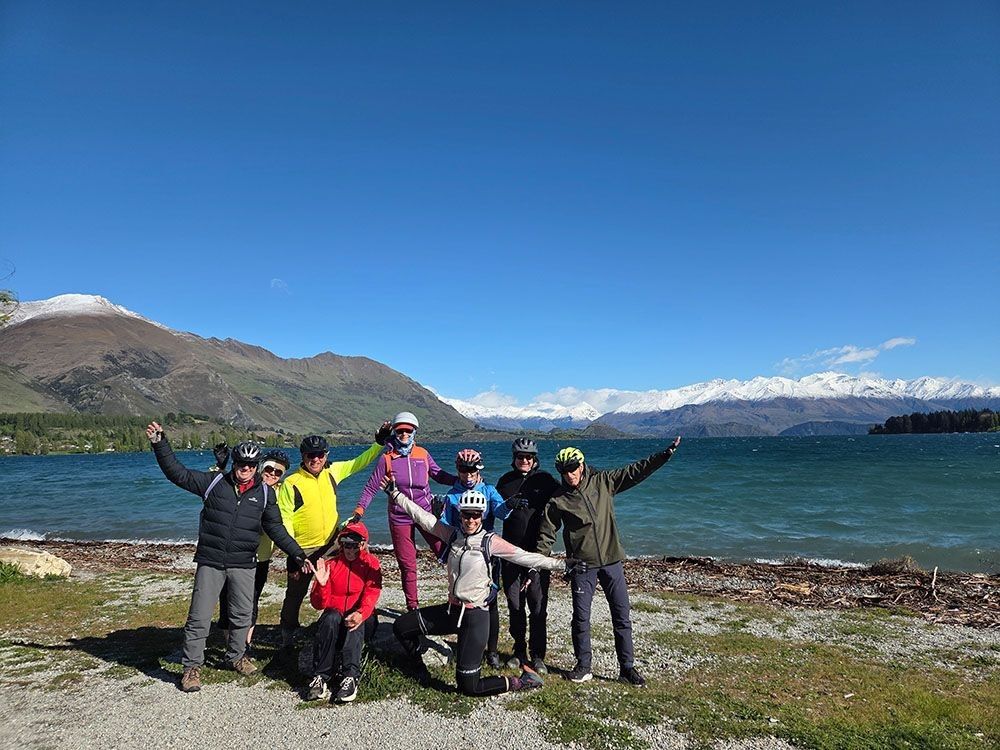
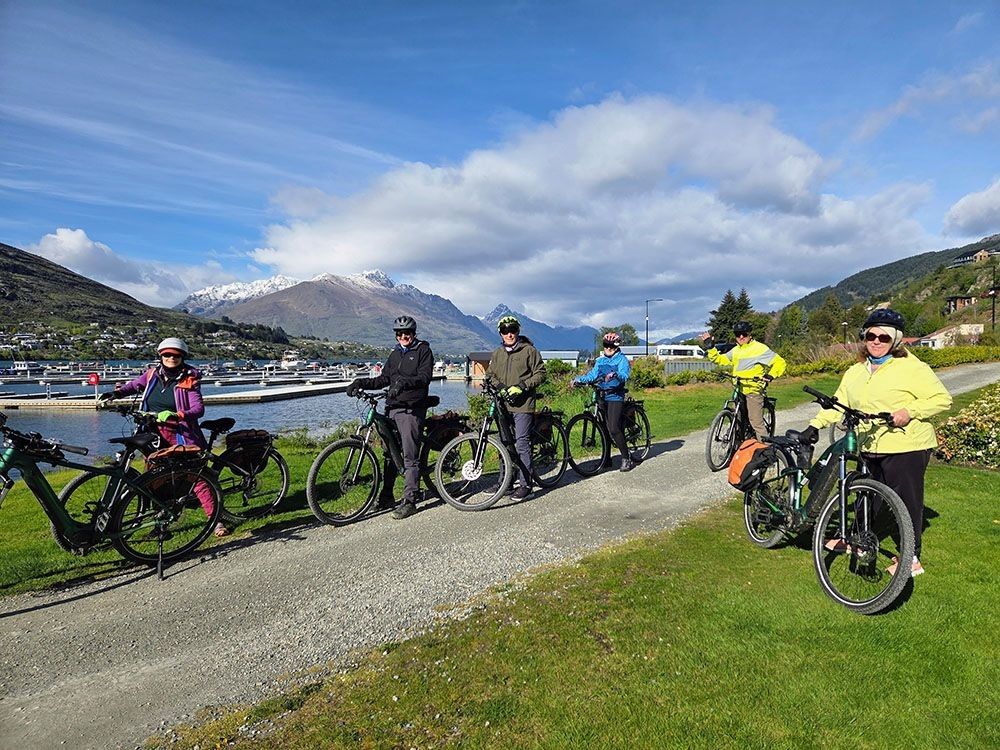
Our guests are typically retired or semi-retired: active travellers who love cycling and want to experience New Zealand from the saddle. They're confident riders with a good level of fitness, comfortable on varied terrain and ready for a little challenge along the way. You don't need to be a mountain biker, but you do need to feel at home on a bike. What our guests share is what they value: great riding, spectacular scenery, comfortable stays and good food, adventure without roughing it, and above all, a well-organised cycling holiday where every detail is taken care of, leaving you free to simply enjoy the ride.
The grades
New Zealand's cycle trails use an official five-grade scale, and we use the same one on every tour page. In plain words:

Grade 1, Easiest:
Suitable for all riders, including families and others seeking an easy, relaxing cycling experience. Most bikes are suitable, including e-bikes, touring bikes, hybrid bikes and children’s bikes.
Off-road trails are smooth (firm gravel or sealed), with only gentle climbs and generally wide enough for side-by-side riding.
Many follow old rail trails. On-road sections of Great Rides generally follow quiet roads with little traffic.

Grade 2, Easy:
Suitable for most riders, including beginners, occasional cyclists and families with limited cycling experience. A multi-geared bike with medium to wide knobbly tyres is recommended.
Off-road trails are usually wide and smooth (firm gravel or sealed), wide enough for riding two abreast, with some gentle hills.
On-road sections generally follow quiet roads with little traffic.

Grade 3, Intermediate:
Suitable for reasonably fit and capable riders. Children should be accompanied by an adult.
Off-road trails can be narrow and may include hills, steep drop-offs and small river crossings. Trail surfaces are mainly firm but may include muddy or loose sections, and obstacles such as rocks or tree roots.
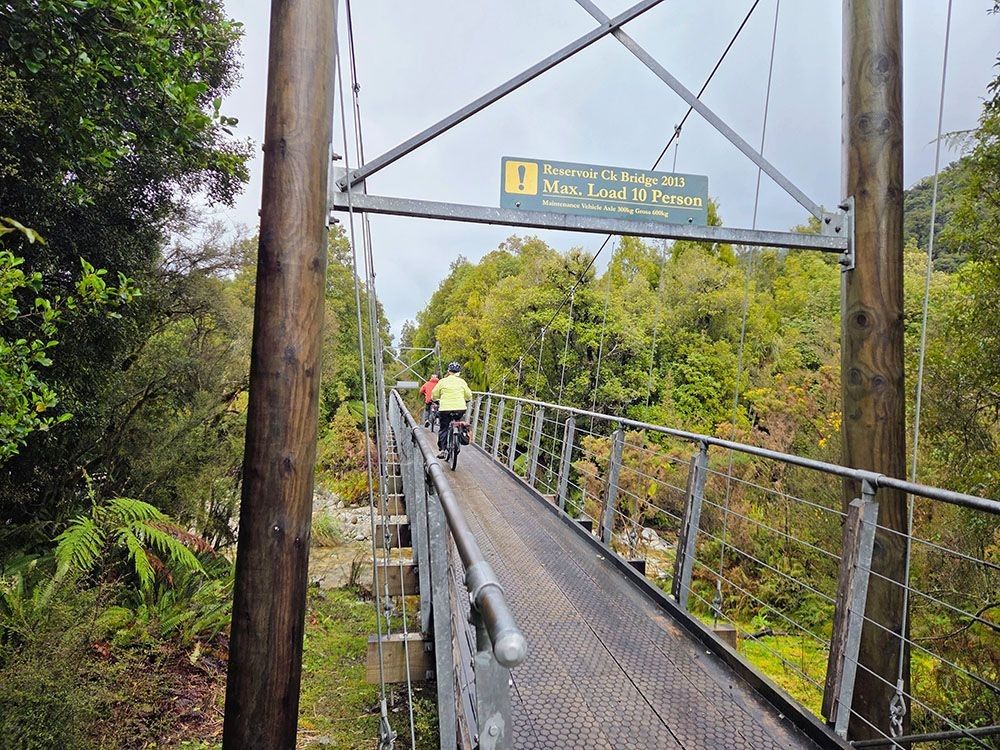
On-road trails/sections may have moderate traffic levels (up to 1000 vehicles a day), and include hill climbs and gravel sections. All Heartland Rides are grade 3 or above.
A mountain bike is recommended for off-road sections. E-mountain bikes are suitable, provided they have sufficient battery capacity and riders can complete the trail in the event of a battery/power failure.
For on-road trails/sections on gravel roads, bikes with knobbly tyres are recommended. Road racing tyres are generally not suitable.

Grades 4, Advanced:
Suitable for fit, experienced cyclists with good off-road and/or on-road skills, a high level of fitness and over 12 years old. Children should be accompanied by an adult.
Off-road trails are narrow with steep climbs and unavoidable obstacles.
The trail surface includes firm and loose sections, with lots of rocks and tree roots. There is likely to be mud and poor traction in places, and some walking required.
A quality, well-maintained mountain bike is recommended for off-road trails. E-mountain bikes are suitable provided they are ridden appropriately, have sufficient battery capacity, and the rider is capable of completing the trail in the event of a battery/power failure.

Grade 5, Expert:
Suitable for fit, experienced cyclists with excellent off-road skills and a high level of fitness. Not suitable for children.
Off-road trails are likely to be challenging with long, steep climbs, precipitous descents and dangerous drop-offs as well as rocks, roots, ruts and potentially hazardous river crossings.
A quality, well-maintained, full suspension mountain bike is recommended. E-mountain bikes are suitable provided they are ridden appropriately, have sufficient battery capacity, and the rider is capable of completing the trail in the event of a battery/power failure.

Your guide to trail grades
Grade wheels are provided for each Great Ride on individual trail pages. They show the approximate split of grades across a trail. This example indicates that the trail is graded 25% grade 1, 25% grade 2, 25% grade 3 and 25% grade 5. Sometimes a mix of terrain means that a section of trail may range across two or even three grades.
E-bikes level the field
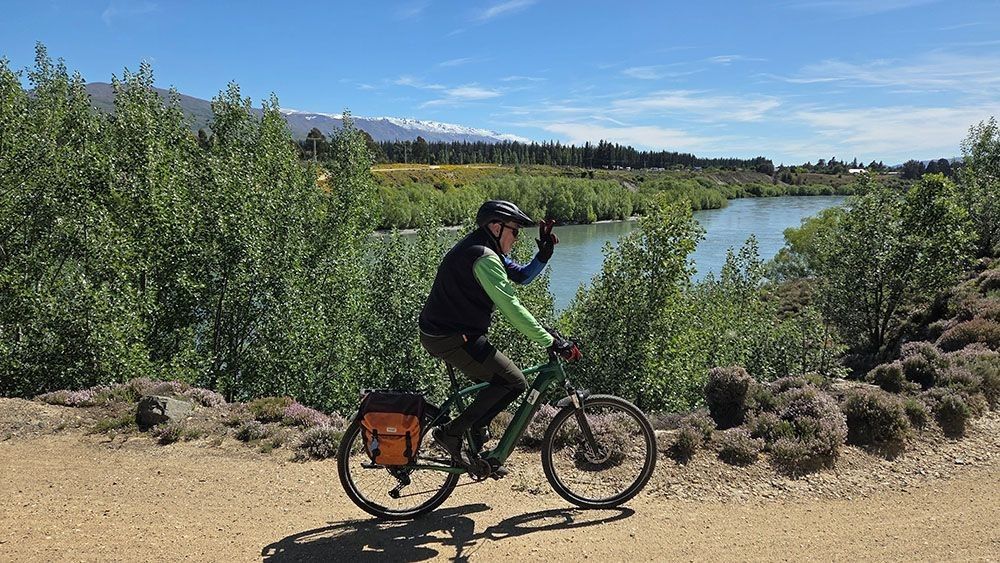
Are e-bike tours good for seniors? Genuinely, yes: they are the reason riders in their sixties and seventies now outnumber the lycra crowd on New Zealand's great trails. The motor works exactly as hard as you ask it to, hills flatten to whatever gradient suits your knees, headwinds lose their vote, and a walking mode powers the bike along beside you on anything you would rather walk. You still pedal, you still earn the views and the appetite: the e-bike just deletes the parts that used to stop people coming.
Every guided tour runs on top-of-the-range e-bikes as standard. Every self-guided tour offers the upgrade, and on the flatter trails plenty of riders are happy without it: the tour pages say which is which.
The bikes
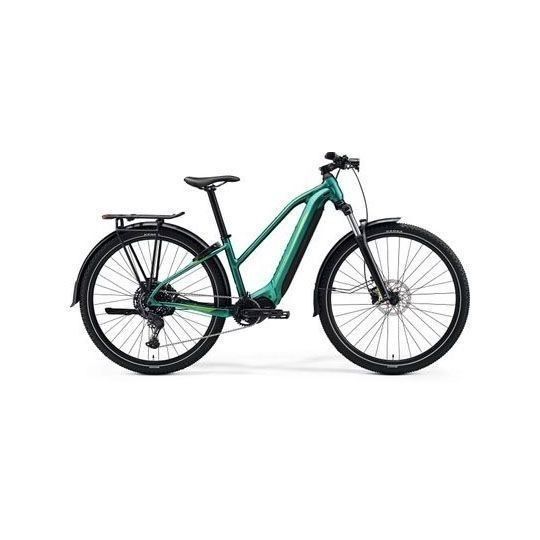
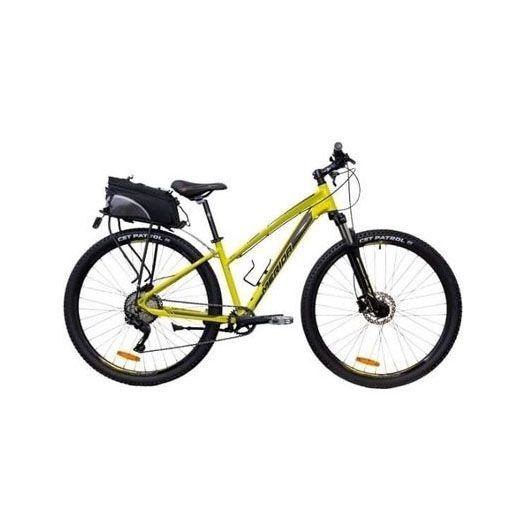
Two fleets, matched to two kinds of tour. Guided tours ride top-of-the-range Merida e-bikes, fitted to you on day one: full range of sizes, a limited number of step-through frames (tell us at booking), free gel seat for the asking, and a walking mode for anything you would rather walk. Self-guided tours ride high quality standard bikes: upright and comfortable, smooth-rolling 29 inch wheels, front suspension, disc brakes and easy gearing, with a low-rise step-through available and an e-bike upgrade on every tour.
Both fleets carry a pannier or top bag, drink bottle, tools, spare tube and helmet, and if you have a saddle or pedals you love, bring them: we will happily fit your own.
How fit is fit enough?
A useful ladder. If a gentle hour on flat trail is your comfortable maximum, start with the Little River day trip or the Otago Rail Trail. If two to three easy hours with stops sounds pleasant, the West Coast Wilderness trail is built for you. If a fuller day in the saddle reads as exciting rather than alarming, our other guided tours are yours, with the Alps, Valleys and Lakes as the most spirited thing we run. Wherever you land, a few practice rides in the month before your tour, ideally on gravel, pay for themselves ten times over.
Nervous is normal
Almost everyone who books their first tour with us is a little nervous, and the ones who admit it usually turn out to be the best-prepared riders in the group. So, plainly: gravel feels different for the first hour and then it feels normal. Nobody is timing you, and our groups genuinely do not operate on a fastest-sets-the-pace basis. On guided tours the van means any section is optional, no explanations needed. On self-guided tours you set the day's length yourself.
Am I too old for an e-bike tour of New Zealand?
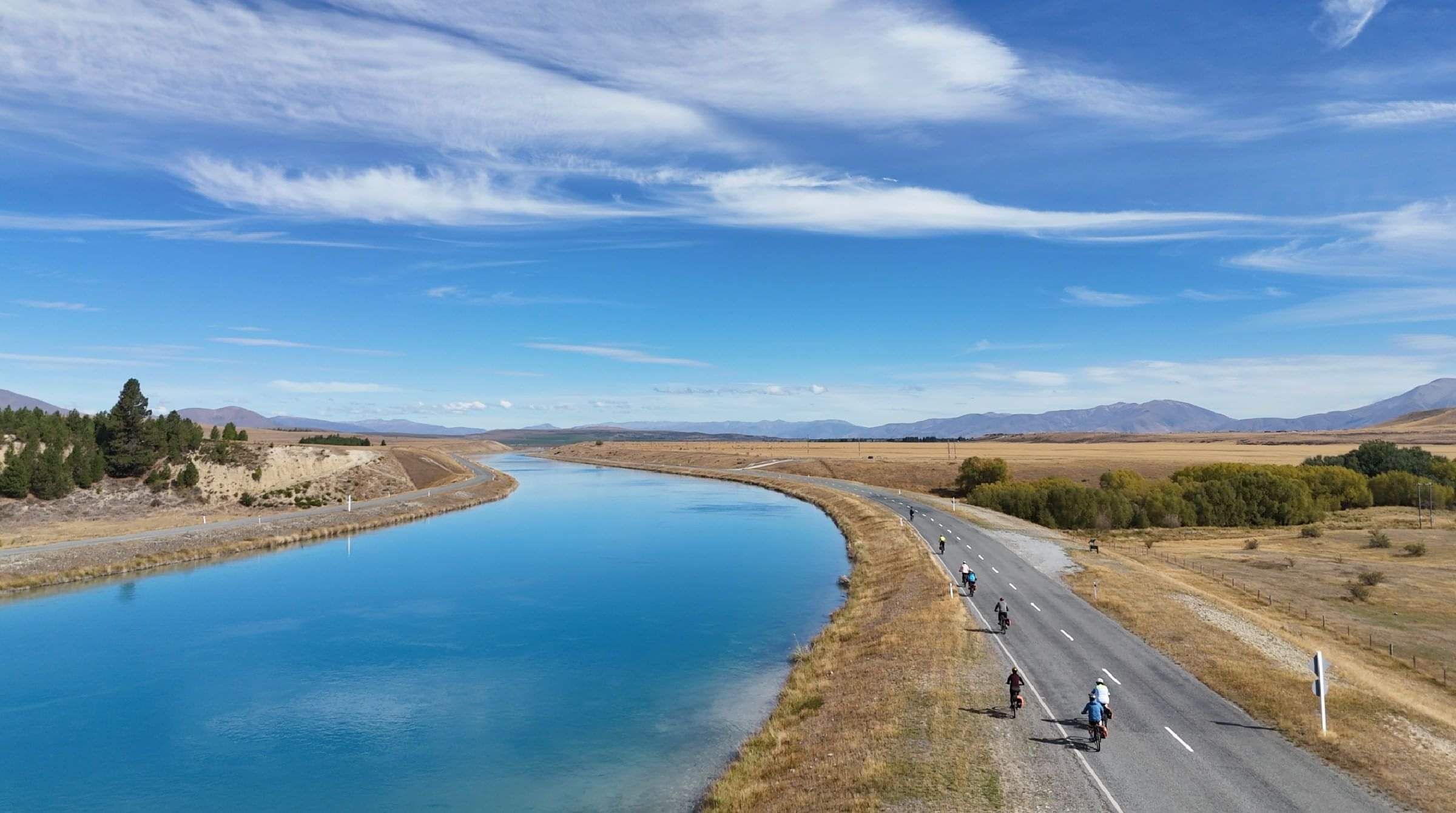
Very unlikely. The majority of our guests are retired/semi-retired and our tours are designed for confident recreational cyclists who want an active New Zealand adventure without sacrificing comfort. Your ability on the bike is much more important than your age.
How fit do I need to be for a New Zealand bike tour?
While bike fitness is an advantage, you don’t need to be an athlete to enjoy an e-bike tour. The motor assists your pedalling, making hills and longer distances much more manageable, and there’s plenty of time to stop for photos, refreshments and the scenery. We do recommend spending plenty of time in the saddle before your tour so you’re comfortable riding for several days in a row. If possible, practise on local gravel trails too, as much of the riding is on compacted gravel.
What happens if I cannot finish a day?
On our guided tours, the support van is never far away on most days, so if you’ve had enough, you can usually finish early and hop in the van. On self-guided tours, there isn’t a support vehicle following you, so it’s important to check the daily distances and trail grades before booking to make sure the tour is right for you.
Are e-bikes cheating?
Only if holidays are a competition. You still pedal, you still climb every metre: the motor just changes how the climbing feels. Ask anyone who has ridden the Southern Alps into a headwind which side of this argument they are on.
Can beginners do a multi-day tour?
Yes, chosen well. Start at the gentle end of the ladder above, take the e-bike, and spend as much time in the saddle as possible beforehand. First-timers finish our gentler tours every season wondering why they waited so long. Talk to us about what tour might suit you best if you’d like some guidance on this.
Do I really need padded shorts?
You will not regret them. Multi-day comfort is mostly saddle comfort: padded shorts, our specially fitted comfort saddles, the free gel seat, and standing on the pedals now and then cover almost everyone. Bring your own saddle if you have a favourite: just let us know before hand so we can advise our depot.
Ask us anything
Tell us what you are thinking and we will reply within one business day.